I just finished up Day 10 of the note-taking challenge and I’ve already noticed a couple of things change in my writing since the start.
letting things be messy
Bianca Pereira, the creator of the challenge, addressed what she calls a ”completionist mindset”. It’s the sort of mindset that wants a notes system to be perfectly organised and for each note to be “complete”. Her point with this is that over time, our knowledge will change and we will necessarily have to edit, amend, or even completely overhaul our notes on a particular topic. So rather than trying to make perfect, little atomic notes, it makes a lot more sense to just embrace a bit of messiness to the whole endeavour.
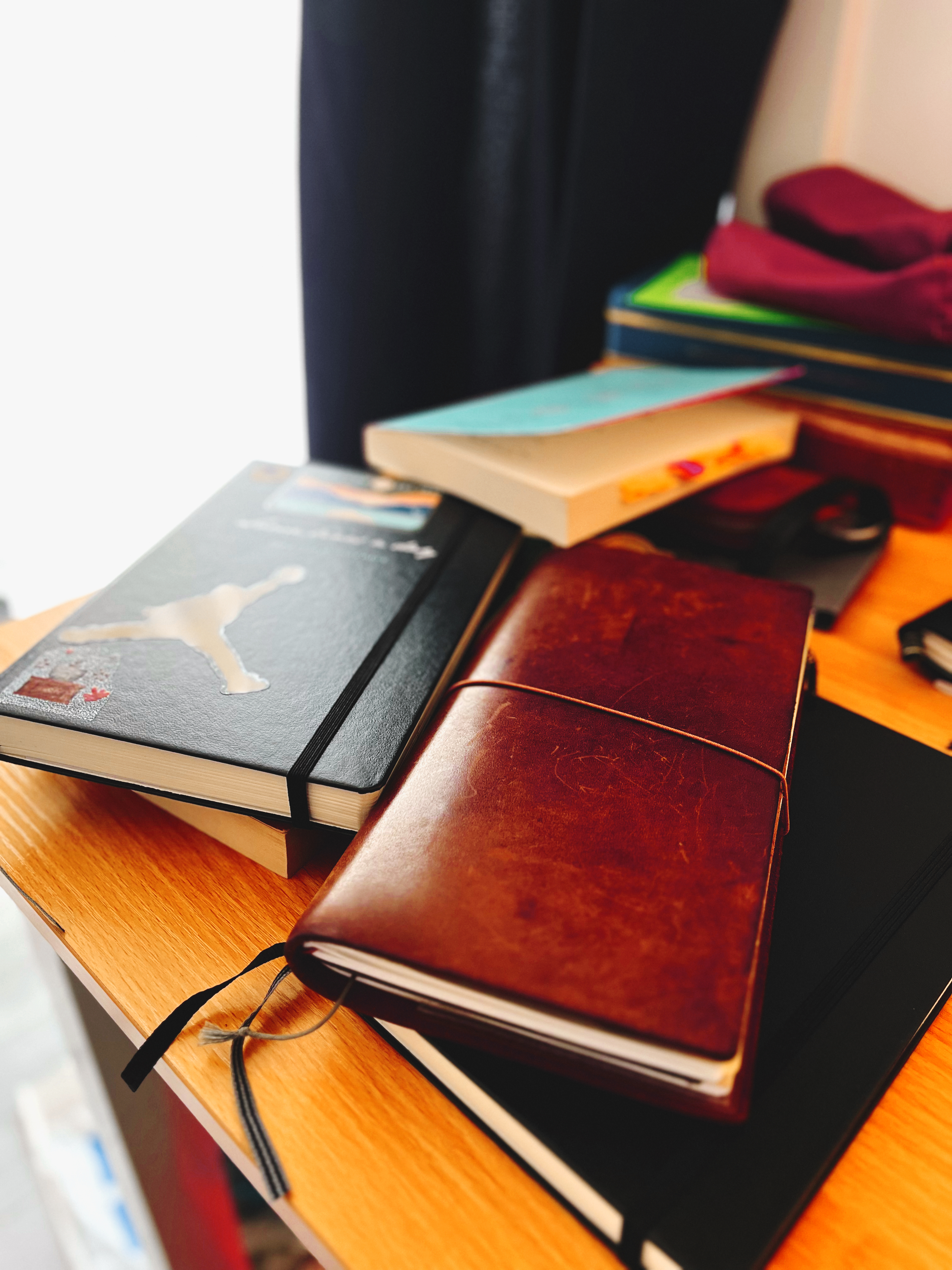
For my own practice, this has meant that the majority of my notes from the challenge are living in a notebook I had set aside as a place for “complete notes”. Now, it’s a much more accessible notebook and it means I’m much more likely to browse through it because I don’t have to be so precious about everything.
I’ve even had to embrace this in ministry. There is a certain amount of mess that comes with it because the work of ministry is a work with a diverse group of people. While it is good to strive for excellence in the things that we do, it’s also very good to strive for just seeing the work getting done. If we keep pushing for perfection in everything then everyone becomes afraid of messing up and there’s no room for risk or taking a chance on things.
free-writing is actually good?
As a teenager, I would fill notebooks with scrawling diatribes about nothing in particular. Before we left America for the first time back in 2010, I burned all of my old journals. The world is a better place without them. You’re welcome.
Those notebooks were full of free-writing. Just page after page of stream-of-consciousness gibberish that wasn’t going to do anyone any good.
But over the last 10 days, I have been forced to do free-writing. Many of the prompts have included free-writing. What has been helpful during these writing sessions is that there are some guard-rails up to guide the free-writing. It isn’t just, “write!” but, “Look at this list of things you wrote the other day. Pick one of those things and answer this question in relation to that.”
Doing that has led to more writing and to more thinking about other things that I have been writing. It has helped me to effectively use the page in front of me as a means of processing rather than just a blank canvas upon which to splatter paint.